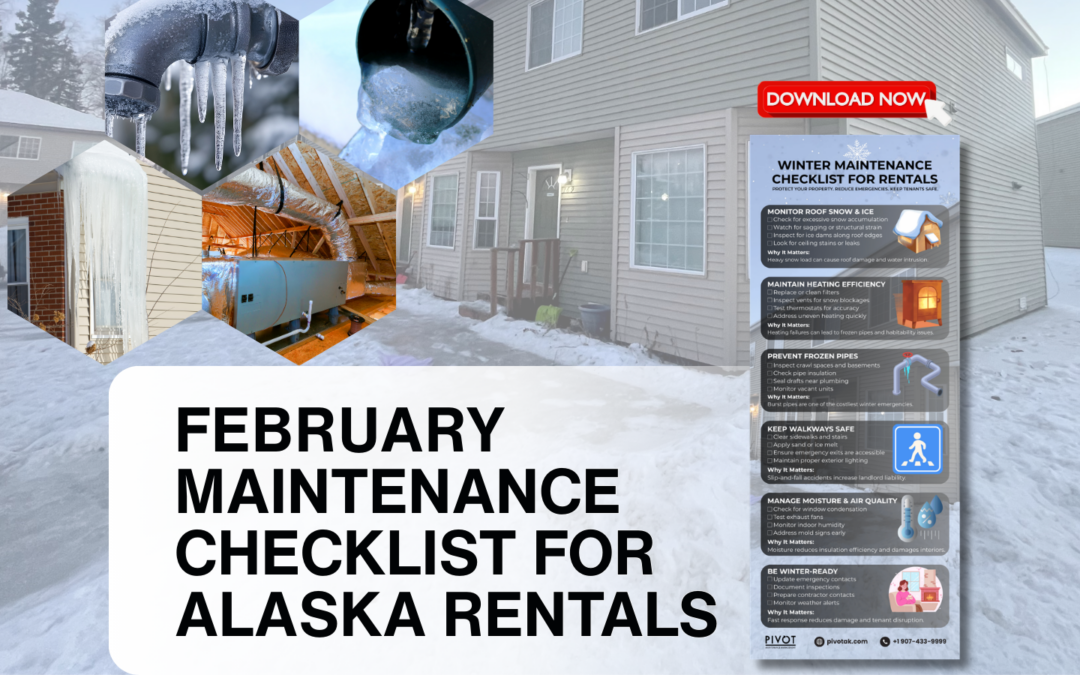
By February, Alaska’s winter has fully settled in. Snow loads are heavier, heating systems have been running nonstop for months, and freeze-thaw cycles begin to create new risks. For rental property owners and managers, February is a critical checkpoint month.
While January is often about monitoring peak cold conditions, February is about preventing late-winter failures and preparing for early thaw impacts. A focused maintenance checklist during this time helps reduce emergencies, protect tenants, and minimize costly repairs before spring arrives.
Below is a practical, Alaska-specific February maintenance checklist designed to keep rental properties safe, efficient, and compliant.
Why February Maintenance Matters in Alaska
February brings unique challenges:
-
Continued subzero temperatures
-
Compacted snow and thick ice buildup
-
Increased roof snow loads
-
Early signs of ice dam formation
-
Higher risk of heating fatigue or system failure
-
Freeze-thaw cycles that expose structural vulnerabilities
Neglecting maintenance in February often leads to expensive repairs discovered during spring melt.
February Maintenance Checklist for Alaska Rentals
1. Monitor Roof Snow Load and Ice Dams
By February, roofs may be carrying significant snow weight.
Checklist:
-
Inspect rooflines for excessive snow accumulation
-
Look for signs of sagging or structural stress
-
Check for ice dam formation along eaves
-
Monitor attic ventilation and insulation effectiveness
-
Watch for interior water stains or ceiling discoloration
Heavy snow load can compromise structural integrity, and ice dams can allow water to seep under shingles.
Helpful resource:
The Federal Emergency Management Agency (FEMA) provides winter roof safety guidance for snow load management in cold climates.
2. Continue Heating System Oversight
Heating systems are under prolonged strain by February.
Checklist:
-
Replace or clean air filters
-
Inspect vents and exhausts for snow blockage
-
Respond promptly to uneven heating reports
-
Listen for unusual noises or system cycling
-
Check thermostats for accuracy
Well-maintained systems reduce fuel waste and lower the risk of mid-season breakdowns.
Helpful resource:
The U.S. Department of Energy’s Energy Saver Guide offers best practices for furnace efficiency and winter heating maintenance.
3. Inspect for Frozen Pipe Risks
Sustained cold combined with temperature fluctuations increases pipe vulnerability.
Checklist:
-
Inspect crawl spaces and basements
-
Check insulation around exposed plumbing
-
Investigate reduced water flow immediately
-
Monitor vacant units regularly
-
Seal drafts near plumbing lines
Frozen pipe incidents are among the most expensive winter repair issues in Alaska rentals.
4. Manage Snow and Ice Accumulation Around Property
February often brings compacted snow and layered ice buildup.
Checklist:
-
Clear walkways, parking areas, and staircases
-
Apply sand or ice melt where needed
-
Ensure emergency exits remain accessible
-
Check exterior lighting for safety
Slip-and-fall accidents are one of the most common winter liability risks.
5. Inspect for Early Thaw Drainage Issues
Toward late February, minor thaw cycles may begin.
Checklist:
-
Check downspouts and gutters for ice blockages
-
Monitor drainage pathways away from foundations
-
Look for pooling water near entryways
-
Inspect foundation areas for cracks
Addressing drainage early reduces spring water intrusion problems.
Helpful resource:
The Alaska Housing Finance Corporation (AHFC) offers cold-climate building and weatherization education relevant to winter drainage and insulation concerns.
6. Check Interior Air Quality and Moisture Levels
Long winter months can increase indoor moisture buildup.
Checklist:
-
Inspect for condensation on windows
-
Test bathroom and kitchen exhaust fans
-
Monitor humidity levels
-
Address signs of mold or mildew promptly
Maintaining balanced humidity improves comfort and preserves building materials.
Helpful resource:
The CDC provides guidance on indoor air quality and moisture control in cold-weather housing.
7. Review Emergency Preparedness Plans
Late-winter storms remain unpredictable.
Checklist:
-
Confirm emergency contractor availability
-
Verify updated tenant contact information
-
Review heating backup plans
-
Document maintenance inspections and actions
Clear documentation demonstrates responsible management and reduces liability exposure.
Why February Is a Strategic Maintenance Month
February is not simply about surviving winter—it’s about stabilizing properties before seasonal transition begins. Proactive maintenance during this period helps:
-
Reduce emergency repair calls
-
Prevent roof and water damage
-
Lower liability risks
-
Improve tenant confidence
-
Protect long-term property value
Ignoring small issues now often leads to larger, more expensive repairs during spring thaw.
The Value of Alaska-Specific Maintenance Planning
Generic maintenance advice doesn’t always account for Alaska’s extreme cold, snow load, and freeze-thaw patterns. Rental property management in Alaska requires localized knowledge and climate-specific strategies.
Property owners and managers seeking regionally informed maintenance guidance often explore the educational resources and service insights provided by PIVOT Maintenance Management. Connecting through the Contact Us page – can help rental owners stay prepared during Alaska’s most demanding winter months.
February is a pivotal month for Alaska rentals. By monitoring snow loads, protecting plumbing, maintaining heating systems, and preparing for thaw conditions, landlords can prevent emergencies and reduce long-term costs.
Winter isn’t over yet – but proactive maintenance ensures your property is ready for what comes next.
A printable PDF version of this Winter Maintenance Checklist is available for download to help landlords and property managers stay organized throughout the season.
Recent Comments