Late winter in Alaska can be deceptively challenging for rental property owners and managers. By the time February and early March arrive, buildings have endured months of subzero temperatures, heavy snow accumulation, and constant heating demand. While the worst storms may have already passed, late winter often reveals issues that developed quietly during the coldest months.
For landlords, this period is the ideal time to conduct a late-winter inspection. A thorough inspection helps identify structural stress, moisture problems, and system inefficiencies before spring thaw begins—when minor issues can quickly escalate into expensive repairs.
This late-winter checklist highlights the most important areas to inspect in Alaska rentals to keep properties safe, efficient, and ready for seasonal transition.
Why Late-Winter Inspections Are Important
By late winter, properties may have experienced:
-
Heavy roof snow loads
-
Freeze-thaw expansion in building materials
-
Ice dams and water intrusion
-
Heating system fatigue
-
Hidden plumbing stress
Late-winter inspections help detect these issues early, allowing property owners to address them before snowmelt and spring moisture introduce additional complications.
Regular inspections also demonstrate responsible property management, helping reduce liability risks and maintain tenant safety.
Late-Winter Inspection Checklist for Alaska Rentals
1. Roof Condition and Snow Load
Roof inspections are one of the most critical late-winter tasks.
Inspection Points:
-
Look for excessive snow accumulation
-
Check for sagging rooflines or structural strain
-
Inspect eaves for ice dam formation
-
Examine attic spaces for moisture or leaks
-
Look for water stains on ceilings or upper walls
Heavy snow combined with fluctuating temperatures can lead to structural stress and roof leaks.
The Federal Emergency Management Agency (FEMA) provides guidance on roof snow load safety and winter structural risks.
2. Gutters, Downspouts, and Drainage
Late winter can reveal drainage problems caused by frozen debris or ice buildup.
Inspection Points:
-
Check gutters for ice blockages
-
Inspect downspouts for ice buildup or damage
-
Ensure drainage paths direct water away from the foundation
-
Look for areas where melting snow may pool
Proper drainage is essential to prevent foundation damage during spring thaw.
The U.S. Department of Housing and Urban Development (HUD) offers seasonal home maintenance guidance that includes drainage and moisture prevention.
3. Heating System Performance
After months of constant operation, heating systems deserve close inspection.
Inspection Points:
-
Replace or clean HVAC filters
-
Inspect vents and exhaust outlets for blockages
-
Check thermostats for proper calibration
-
Listen for unusual noises or irregular cycling
-
Confirm consistent heat distribution throughout units
Maintaining heating efficiency helps reduce utility costs and prevents system failures late in the season.
The U.S. Department of Energy’s Energy Saver program offers winter heating efficiency recommendations.
4. Plumbing and Pipe Integrity
Frozen pipes may not always burst immediately—damage can appear later when temperatures begin to fluctuate.
Inspection Points:
-
Check exposed pipes in basements and crawl spaces
-
Inspect pipe insulation
-
Look for slow leaks or corrosion
-
Investigate reduced water pressure or unusual sounds
-
Monitor areas prone to freezing drafts
Preventive plumbing checks can save thousands in potential water damage repairs.
5. Exterior Walkways and Safety Hazards
Snow and ice buildup can create dangerous conditions for tenants and visitors.
Inspection Points:
-
Check sidewalks, stairs, and ramps for ice accumulation
-
Ensure snow removal pathways remain clear
-
Inspect handrails and exterior lighting
-
Verify that emergency exits are accessible
Slip-and-fall incidents are among the most common winter liability claims for rental properties.
6. Interior Moisture and Air Quality
Late winter is when moisture issues often appear inside buildings.
Inspection Points:
-
Look for condensation on windows
-
Inspect walls and ceilings for mold or mildew
-
Ensure bathroom and kitchen ventilation fans work properly
-
Monitor indoor humidity levels
Maintaining balanced indoor air quality protects building materials and improves tenant comfort.
The Centers for Disease Control and Prevention (CDC) provides guidance on indoor moisture control and mold prevention.
7. Foundation and Exterior Structure
Freeze-thaw cycles can create stress on foundations and exterior surfaces.
Inspection Points:
-
Inspect foundation walls for cracks
-
Check siding for damage or gaps
-
Look for soil erosion or drainage issues near the building
-
Examine exterior caulking around windows and doors
Addressing structural issues early helps prevent water intrusion during spring thaw.
Preparing Rentals for the Transition to Spring
Late-winter inspections are also an opportunity to begin preparing for seasonal change.
Property managers can start planning for:
-
Spring roof inspections
-
Exterior repairs once temperatures rise
-
Drainage improvements
-
Preventive HVAC servicing
-
Landscape and grading corrections
Taking these steps early allows landlords to schedule repairs before contractors become fully booked in spring.
Maintenance strategies that work in milder climates often overlook the extreme conditions Alaska properties face. Snow load management, freeze-thaw stress, and prolonged heating demand require region-specific knowledge.
Property owners and managers looking for guidance tailored to Alaska’s environment often explore the educational resources and service insights provided by PIVOT Maintenance Management. Contact us to stay informed and better prepared for seasonal maintenance challenges.
Late winter is a pivotal moment for Alaska rental properties. By inspecting roofs, plumbing, heating systems, and safety areas before spring thaw begins, landlords can prevent small issues from turning into costly repairs.
Proactive inspections not only protect property investments but also ensure safer living conditions for tenants throughout Alaska’s demanding winter season.
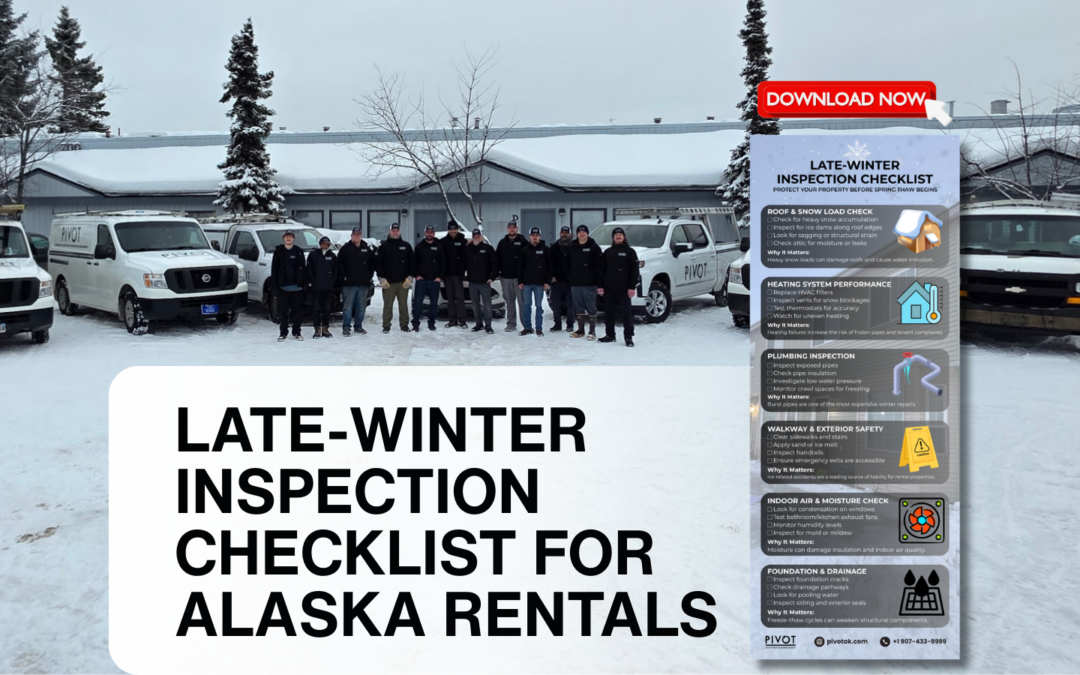
A printable version of this Late-Winter Inspections Checklist is available for download to help landlords and property managers stay organized throughout the season.
Recent Comments