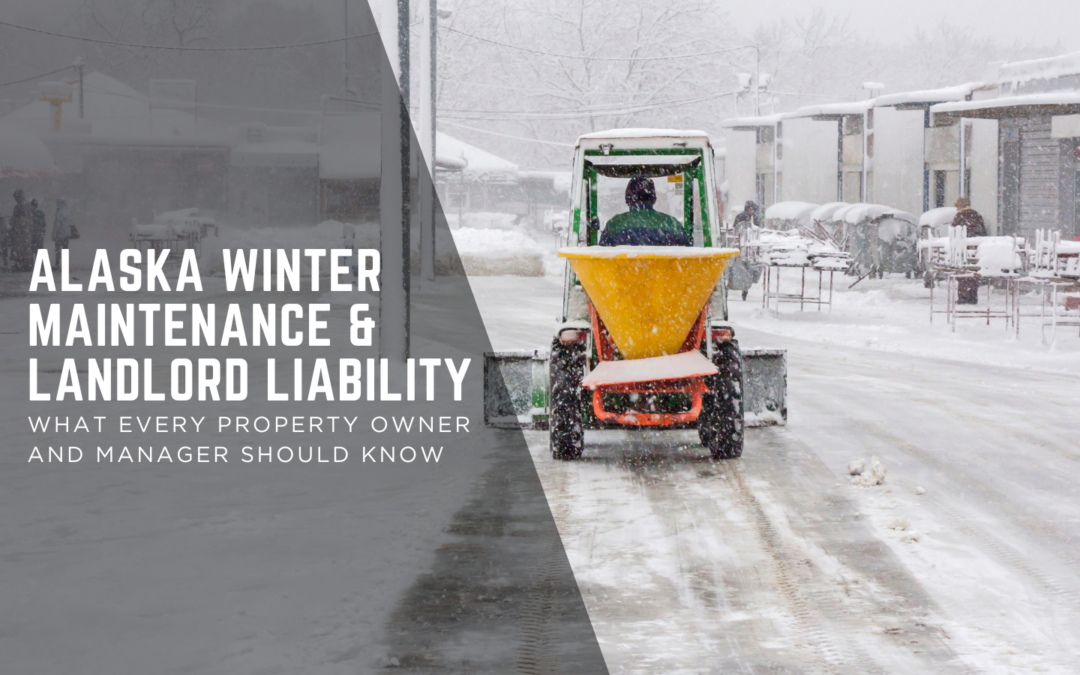
Winter in Alaska isn’t just a season – it’s a stress test for every property. Subzero temperatures, heavy snowfall, ice accumulation, and limited daylight create conditions where even small maintenance issues can quickly become safety hazards. For landlords and property managers, winter is also when liability risk peaks.
Slip-and-fall injuries, heating failures, frozen pipes, and roof damage are among the most common winter incidents that lead to tenant complaints, insurance claims, and legal disputes. Understanding how winter maintenance intersects with landlord liability is essential for protecting tenants, properties, and long-term investments across Alaska.
Why Winter Increases Landlord Liability in Alaska
Alaska’s climate intensifies risk in ways most regions don’t experience. Extreme cold accelerates material failure, while snow and ice create constant safety hazards around buildings. Liability often arises not from the weather itself, but from failure to take reasonable steps to mitigate known winter risks.
Common liability triggers include:
- Icy walkways and entrances
- Inadequate snow removal
- Heating system outages
- Frozen or burst pipes causing water damage
- Roof collapses or falling ice
- Delayed response to winter-related maintenance issues
When these risks aren’t addressed promptly, landlords may be held responsible for injuries, property damage, or habitability violations.
The Landlord’s Duty of Care During Winter
In Alaska, landlords are generally expected to maintain properties in a safe and habitable condition, even during extreme weather. Winter does not reduce this responsibility – it heightens it.
Key expectations typically include:
- Providing reliable heat
- Maintaining safe access to the property
- Preventing known hazards such as ice buildup
- Responding promptly to maintenance issues
- Complying with applicable local safety and building codes
Failing to meet these expectations can expose landlords to liability claims, fines, or disputes with tenants.
High-Risk Winter Maintenance Areas Landlords Should Prioritize
1. Snow and Ice Management
Slip-and-fall accidents are one of the most common winter liability claims.
Landlords should ensure:
- Regular snow removal from sidewalks, stairs, and parking areas
- Application of sand or ice melt in high-traffic zones
- Adequate lighting during limited daylight hours
- Timely response after storms
Consistent documentation of snow and ice removal is also critical in demonstrating due diligence.
2. Heating Systems and Indoor Temperatures
In Alaska, heat isn’t a comfort feature – it’s a necessity.
Neglected heating systems can lead to:
- Unsafe living conditions
- Frozen pipes
- Tenant displacement
- Potential habitability violations
Routine inspections, filter replacements, and system monitoring reduce the risk of mid-winter failures and emergency calls.
3. Plumbing and Frozen Pipe Prevention
Frozen pipes often cause the most expensive winter damage.
Preventive steps include:
- Insulating exposed pipes
- Monitoring unheated or vacant units
- Addressing drafts or cold zones early
- Responding quickly to reduced water flow reports
A burst pipe doesn’t just cause water damage – it can trigger insurance claims and tenant disputes if maintenance was delayed.
4. Roof Safety and Snow Load
Heavy snow accumulation puts enormous strain on roofs.
Landlords should:
- Monitor snow load levels
- Remove excessive buildup when necessary
- Inspect for ice dams and drainage issues
- Ensure proper attic insulation and ventilation
Roof failures pose serious safety risks and can result in costly structural repairs.
5. Communication and Emergency Preparedness
Clear communication reduces confusion and complaints during winter emergencies.
Best practices include:
- Informing tenants about winter maintenance schedules
- Providing guidance on reporting urgent issues
- Establishing clear emergency contact procedures
- Keeping maintenance logs and response records
Preparedness demonstrates responsibility and helps protect landlords if disputes arise.
How Proactive Winter Maintenance Reduces Liability
Landlords who plan ahead experience fewer emergencies, fewer complaints, and significantly lower liability exposure. Proactive winter maintenance helps by:
- Identifying risks before they become hazards
- Reducing the likelihood of tenant injuries
- Minimizing emergency repair costs
- Demonstrating reasonable care and compliance
In Alaska’s climate, prevention is not optional – it’s the most effective form of risk management.
Why Alaska-Specific Expertise Matters
Generic maintenance strategies often fall short in extreme cold environments. Alaska’s weather demands localized knowledge, reliable response systems, and maintenance plans built for severe winter conditions.
Landlords seeking guidance, planning tools, or professional winter maintenance support often turn to Alaska-based resources like PIVOT Maintenance Management for insight into region-specific challenges and solutions. Exploring these resources – or reaching out through the Contact Us page – can help landlords stay compliant, prepared, and protected throughout the winter season.
Recent Comments