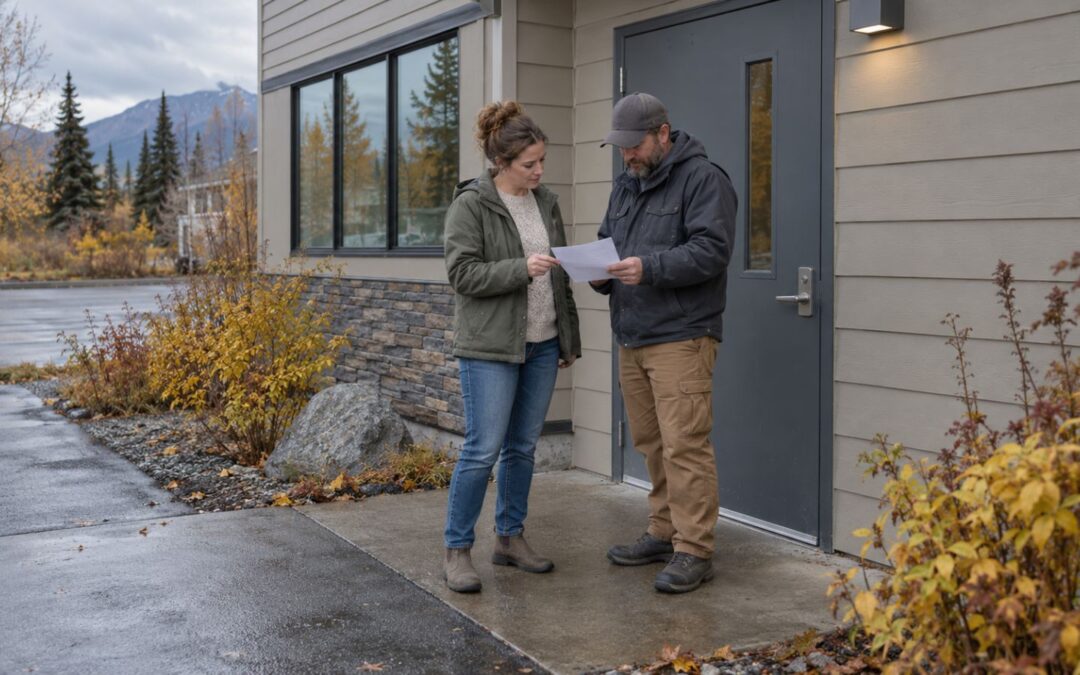
The maintenance provider arrives on time, but the room is locked. The business contact is unavailable. A delivery is using the access area, and the person who booked the work assumed someone else would be there.
The appointment was scheduled. The visit was not fully coordinated.
At a commercial property, these gaps can stop work before a tool is unpacked. The issue is often a missing handoff between the owner, manager, tenant business, and service provider.
October is a useful time to review that handoff for Southcentral Alaska properties. Plan around the actual building, its occupants, and current site conditions rather than assuming that a calendar entry makes the property ready.
Define What the Visit Is Meant to Achieve
Start with the requested outcome. Is the provider attending to investigate a symptom, perform approved work, complete routine service, or assess a recommendation?
Those purposes require different preparation. An assessment visit may need previous reports and access to several locations. Approved corrective work may depend on the right component being available. Routine service may need coordination with equipment operating times.
Provide a precise location and a factual description. “Review recurring water near the rear office window” is more useful than “Check the building.”
Keep observations separate from conclusions. Unless a qualified professional has confirmed a cause, a request should not present a suspected diagnosis as established fact. The provider needs the problem history and the agreed scope, not a forced answer.
Identify Who Can Authorize the Next Decision
A visit can pause when the technician discovers a condition outside the original scope. The manager who scheduled the appointment may not be authorized to approve additional work or change an operating arrangement.
Before arrival, identify the appropriate decision-maker and how the provider reaches that person. Clarify which changes require authorization under the property’s existing arrangements.
Do not place spending authority or sensitive approval details in public documents. Share what the provider needs through the agreed private channel.
If the decision-maker will be unavailable, establish what happens when a new decision is needed. The answer may be to document the finding and arrange a follow-up. It should not be an assumption that anyone on site can authorize anything.
Arrange Access Without Sharing More Than Necessary
Confirm which entrance the provider should use, who meets the arrival, and which spaces require authorized access.
Access should follow the building’s security procedures. Avoid circulating codes, keys, or alarm details through broad email lists or publicly visible notes. A general booking confirmation can name the access contact without exposing credentials.
Confirm practical restrictions: whether an escort is needed, whether a room is occupied, and whether the route is available during the service window.
Do not ask staff to bypass a security or safety restriction to keep an appointment moving. A restricted area needs the appropriate authorization and professional arrangements.
If access cannot be confirmed, record that clearly. “Vendor booked; access confirmation pending with building contact” exposes the dependency before arrival.
Coordinate With the Tenant Business
A commercial maintenance visit may affect more than the property manager. The work area could overlap customer activity, deliveries, staff routines, or a business’s operating hours.
Ask the provider what disruption is anticipated and share the relevant information with the authorized business contact. Confirm the service window and any preparation the occupants must arrange.
Do not promise that there will be no interruption unless that has been established. A better update describes the agreed window and the scope currently understood.
When multiple businesses share a building, identify whether common spaces or more than one tenancy may be affected. One contact’s agreement may not cover every occupant.
The purpose is a consistent plan. The owner, manager, provider, and business contact should not each be working from a different version of the visit.
Protect the Route Through the Building
The access route includes more than the entrance. Consider where the provider will move, whether materials can be staged, and whether ordinary building activity conflicts with the work area.
OSHA’s workplace exit-route standard requires exit routes to remain unobstructed, including by temporarily placed materials or equipment. Work planning should preserve required exit access.
This does not replace a property-specific safety plan or professional requirements. It is a reason to agree on appropriate staging before the visit rather than putting supplies in the nearest corridor.
Use authorized personnel to address hazards. Do not send an unqualified property contact into an unsafe area to prepare for a contractor.
Create a Compact Pre-Visit Handoff
A concise confirmation can hold the essential details in one place:
- Property and exact work location
- Purpose of the visit and agreed scope
- Confirmed service window
- Arrival contact and backup contact
- Authorized access arrangement
- Relevant operating restrictions
- Previous reports or photographs, where appropriate
- Contact for additional decisions
- Destination for the completion report
This is an operational planning framework, not a substitute for a contractor’s technical procedures. Keep specialist safety requirements with the qualified provider.
Use the same reference in the booking and the subsequent service record. That connection makes it easier to determine whether the agreed work happened or whether the visit changed.
A Hypothetical Scheduling Gap
A small office property in Palmer books an assessment of a recurring door issue. The provider expects to review both the entrance and an interior door. The business contact expects work only at the entrance.
Before arrival, the coordinator confirms the scope, informs the business contact, and arranges authorized access to both locations. The provider now has a clear assessment plan.
This hypothetical example shows a coordination correction, not a guaranteed result. The professional may still identify an additional issue or need another appointment.
The useful change is that everyone knows the intended visit and the next decision contact.
Plan for a Changed Visit
Weather, access conditions, a provider’s assessment, or a building’s operations can change the original plan. Decide who updates the affected people if the time or scope changes.
Record the reason for the change and the next action. A missed visit should not vanish from the maintenance queue simply because the original calendar entry has passed.
After the visit, connect the service report to the original request. Note work performed, outstanding recommendations, and any further coordination.
Pivot’s Work Order Management service includes vendor coordination and progress tracking. Those functions can connect booking details with the resulting record.
Make the Appointment Service-Ready
A commercial maintenance booking becomes more useful when it answers who is coming, what the visit is for, how authorized access works, and who handles a new decision.
No process can remove every delay. It can make the known dependencies visible before they interrupt the visit.
For help coordinating those details at an Alaska commercial property, discuss your maintenance-management needs with Pivot.
Recent Comments