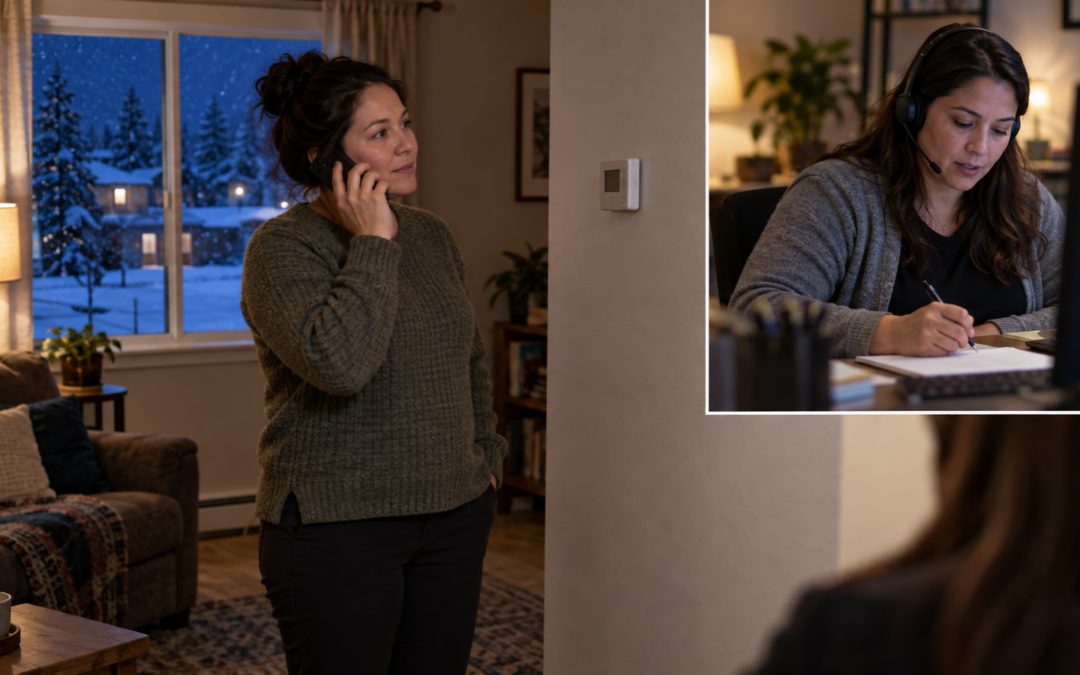
A resident calls at 10:30 PM and says, “The heat is not working.” The phone has been answered, but the maintenance problem is not yet organized.
Someone still needs to capture the right information, identify immediate safety concerns, decide who owns the next step, coordinate qualified help when appropriate, and create a record for the property owner. When those responsibilities are unclear, the call can turn into repeated messages and uncertain handoffs.
For residential properties in Anchorage, Eagle River, Chugiak, Wasilla, Palmer, and Girdwood, heating reports deserve a calm process. That process should support fast, informed decisions without encouraging residents or owners to diagnose or repair heating equipment themselves.
A Phone Answer Is Only the Beginning
After-hours maintenance intake is not the same as technical diagnosis. The first objective is to turn a vague report into information that a trained person can evaluate.
Useful intake questions may establish:
- The property address and unit
- The caller’s name and safe callback number
- Which rooms or areas are affected
- What the thermostat displays
- Whether the condition is new or recurring
- Whether there are unusual sounds, odors, smoke, visible damage, or alarms
- Whether anyone has symptoms that could indicate a safety emergency
- Whether safe property access is available
The person receiving the report should avoid asking an occupant to open equipment, handle wiring, relight an appliance, climb, or enter a hazardous area. Those tasks belong to appropriately qualified people.
The Pivot 24/7 Emergency Call Line describes live response, initial troubleshooting, emergency dispatch when needed, specialty-vendor coordination, and reporting. The operational value is the sequence: a report enters a defined process instead of sitting in an unattended inbox.
Separate the Report From the Decision
The caller can describe what they observe. A trained decision-maker should determine what happens next.
For example, “the living room is 58 degrees” is an observation. “The boiler has failed” is a diagnosis. The distinction matters because the same indoor condition can have different causes, risks, and response requirements.
An organized process records observable facts first. It then routes those facts to the person authorized and qualified to assess urgency. Depending on the situation, the next step might be additional safe questions, instructions to leave an unsafe area, contact with emergency services, qualified technical support, dispatch, or planned follow-up.
No article can determine the correct response to an individual heating event. Property owners should define their response authority, vendor contacts, and escalation expectations before a cold-night call arrives.
Treat Carbon Monoxide Reports as Safety Events
Heating complaints can overlap with carbon monoxide concerns. Carbon monoxide cannot be seen or smelled, so an occupant should not rely on sensory checks to rule it out.
The U.S. Consumer Product Safety Commission recommends carbon monoxide alarms on every level of a home and outside sleeping areas. It also advises anyone who suspects carbon monoxide poisoning to get outside to fresh air immediately and call 911.
If an alarm sounds, someone reports possible exposure symptoms, or combustion safety is uncertain, follow emergency guidance. Do not tell an occupant to search for the source, reset equipment, or remain inside while waiting for routine maintenance.
Property documentation should also distinguish a safety escalation from a normal comfort complaint. That helps the owner understand what was reported and why a particular action was taken.
Give the Next Step an Owner
An after-hours process becomes unreliable when several people know about the issue but no one owns the next action.
A practical chain assigns responsibility at each point:
- Receive: Record the report and confirm a callback method.
- Review: Evaluate the information against established safety and urgency criteria.
- Coordinate: Contact the qualified technician or specialty vendor when required.
- Track: Record accepted assignments, contact attempts, access details, and status changes.
- Report: Notify the appropriate owner or manager according to the agreed communication plan.
- Follow up: Confirm the next documented status during normal operations.
These steps do not guarantee a particular response time or outcome. They create visibility around the decision and reduce ambiguity about who is doing what.
Prepare Access and Authority Before Winter Calls
Even a well-described problem can stall when operational details are missing. Residential owners and managers should decide in advance:
- Who may authorize after-hours work
- Which situations require immediate owner notification
- Which qualified vendors cover heating systems and related specialties
- How keys, lockboxes, gate codes, pets, and occupied units are handled
- What spending or scope questions require escalation
- Where service records and equipment information are stored
- Who confirms status with the resident
Access information should be protected and shared only with authorized people. It should also be current. A phone number or lockbox instruction that changed last spring can create avoidable delay in November.
Document What Happened, Not What Was Assumed
A useful record tells the next reader what occurred without turning speculation into fact.
The record might include the time received, reporter, observed condition, safety questions asked, instructions provided, people contacted, response accepted, arrival or appointment status, technician findings when available, and follow-up responsibility.
Avoid entries such as “fixed” when the record only shows that a vendor was contacted. Avoid labeling a cause before a qualified assessment. If an update is pending, say so plainly and identify who owns it.
This documentation supports resident communication and creates a maintenance history that can inform later planning. It is also valuable when similar reports arise in the same unit or building.
Hypothetical Example: From Vague Call to Clear Handoff
Hypothetical example: A resident reports that two rooms feel cold and the thermostat shows 59 degrees. The call receiver confirms the address, callback number, affected areas, displayed temperature, and whether any alarms, smoke, unusual odors, or symptoms are present. No one asks the resident to access the heating equipment.
The report is routed under the property’s agreed decision process. The designated person reviews the observations, coordinates qualified help, records contact attempts, and sends the owner a status update. The next morning, the open item has a named owner and a documented next step.
The example does not promise that every heating concern will be resolved overnight. It shows why structured intake and clear ownership matter.
Review the Process Before the Next Call
A strong after-hours plan answers four questions: Who receives the report? Who evaluates it? Who coordinates the appropriate response? Who communicates and documents the result?
If any answer depends on memory or an informal text chain, now is a good time to clarify it. Pivot provides maintenance-management support for residential and commercial properties, including an emergency call-line process. Contact Pivot to discuss how after-hours maintenance reports move through your current system.
Recent Comments