
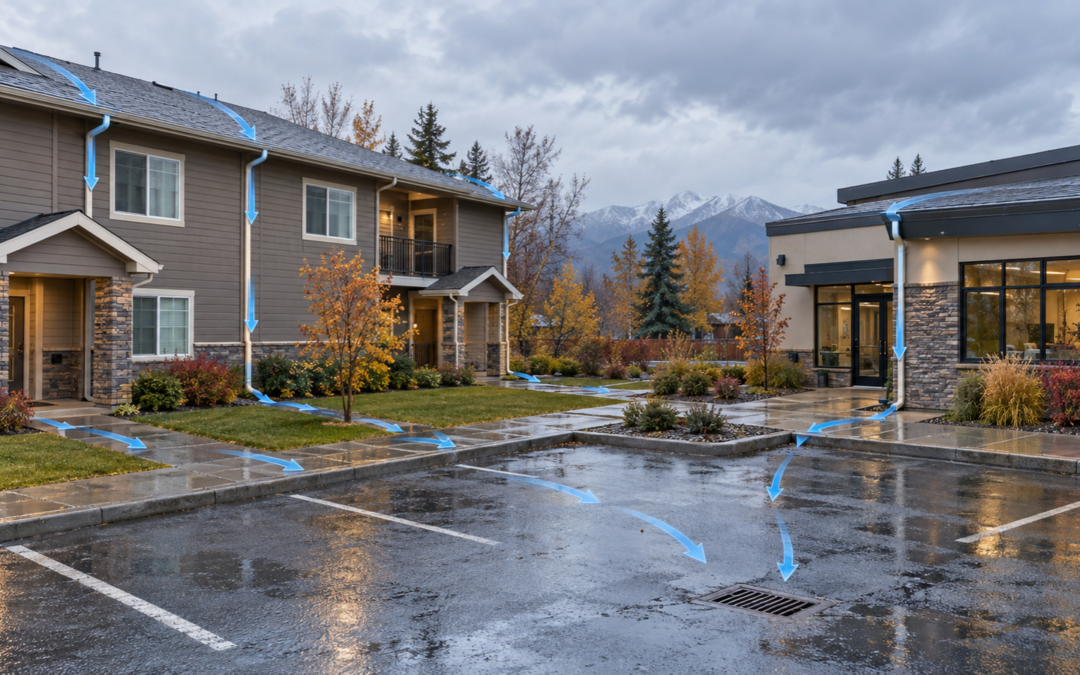
Late September can make an Alaska property look deceptively manageable. Rain drains away during the day, walkways appear clear, and parking areas remain easy to use. Once overnight temperatures reach freezing, however, the same water can become an access problem before the first major snowfall arrives.
This transition matters because freeze and refreeze problems are rarely random. Water tends to follow the same slopes, collect in the same depressions, drip from the same roof edges, and cross the same walking routes. A careful inspection during wet weather can reveal those patterns while there is still time to correct or manage them.
For residential and commercial property owners, the goal is not to promise an ice-free site. The practical goal is to identify where water travels, reduce avoidable accumulation, and create a clear response process for the areas most likely to refreeze.
Why Refreezing Deserves Its Own Maintenance Plan
Snow removal and refreeze prevention are related, but they are not the same task. A property may be plowed and shoveled correctly while still developing ice from roof runoff, poorly directed downspouts, clogged drains, daytime melting, or water flowing across a walkway.
Near-freezing conditions deserve particular attention because thin ice can be difficult to see. The National Weather Service winter preparedness guidance notes that black ice may be hard to detect and advises treating near-freezing conditions as potentially icy.
Commercial owners and employers also have operational responsibilities that extend beyond comfort. The Occupational Safety and Health Administration walking-working surfaces standard addresses inspection and maintenance of workplace surfaces and specifically identifies snow and ice among the hazards that must be managed.
The exact legal and code requirements depend on the property, its use, and the jurisdiction. Owners and managers should confirm the standards that apply to their site. Even where a specific rule does not apply, the maintenance principle remains useful: recurring water and ice conditions should be documented, prioritized, and addressed.
Inspect While Water Is Moving
A dry-weather inspection can show cracks and grading, but it may not reveal the full drainage pattern. One of the most useful times to walk a property is during light rain or shortly afterward.
Observe where water begins, where it travels, and where it stops. Photograph the route rather than only the final puddle. A low spot may be the visible symptom, while the actual source is a disconnected downspout, an overflowing gutter, or runoff redirected by compacted soil.
During the walkthrough, check:
- Roof edges where water drips directly onto entrances or walking routes
- Gutters that overflow or leak at seams
- Downspouts that discharge toward foundations, stairs, ramps, or sidewalks
- Parking-lot depressions and potholes that hold water
- Sloped pavement that directs runoff across pedestrian routes
- Floor drains, trench drains, and catch basins that are slow or obstructed
- Exterior faucets, hoses, and irrigation components that may continue releasing water
- Condensate or equipment drains that empty near a building entrance
- Snow-storage areas that may later send meltwater back toward the property
The goal is to build a map of water movement before that water freezes.
Start With Entrances and Primary Walking Routes
Entrances are especially vulnerable because they combine roof runoff, vehicle traffic, foot traffic, door movement, and temperature changes. Water may be carried inside on shoes, collect beneath mats, or refreeze just outside the threshold.
At residential properties, inspect front steps, porch landings, side entrances, mail areas, dumpster routes, and the path between parking and the building. At multifamily properties, include shared stairs, exterior corridors, laundry access, and routes to utility areas.
Commercial properties usually require a broader route review. Include employee entrances, customer approaches, delivery areas, loading zones, accessible routes, emergency exits, service doors, and any walkway connecting separate buildings.
Look for more than standing water. Uneven pavement, loose handrails, damaged stair nosings, curled mats, and poor lighting can become more consequential when a surface is wet or icy.
Follow the Water From the Roof to the Ground
Roof drainage is often treated as a roof issue, but its effect continues at ground level. A functioning gutter can still create a problem if the downspout sends water across a sidewalk. A clear roof drain can still contribute to refreezing if its discharge location is poorly chosen.
Inspectors should trace the full route:
- Where does rain or meltwater leave the roof?
- Does it enter the gutter or drainage system correctly?
- Is the downspout or drain clear and connected?
- Where does the discharge land?
- Does the surrounding grade carry water away from the building?
- Could the water cross an entrance, ramp, stair, driveway, or parking aisle before reaching its final destination?
Do not climb onto a wet, icy, or otherwise unsafe roof to complete this review. Roof, electrical, drainage, or structural work that exceeds a routine ground-level inspection should be assigned to a qualified professional.
Check Low Areas Before They Disappear Under Snow
Small surface defects are easier to recognize before snow covers the site. Mark or photograph depressions, broken pavement, sunken pavers, eroded soil, and damaged drainage edges now. Once snowfall begins, those areas may remain hidden while continuing to collect meltwater.
For commercial and multifamily properties, consider adding vulnerable areas to a site map used by maintenance staff and snow-removal vendors. The map can identify:
- Known refreeze zones
- Drainage structures that must remain clear
- Priority pedestrian routes
- Areas where snow should not be stored
- Locations that need additional observation after warming or rainfall
- Safe locations for site-appropriate traction materials
A written map helps turn local knowledge into an operating procedure. It also reduces dependence on one person remembering every trouble spot.
Treat Recurring Ice as a Work Order, Not a Weather Surprise
If ice repeatedly forms in the same location, document it as a recurring maintenance condition. Record the date, temperature pattern, likely water source, temporary response, and recommended corrective action.
Useful documentation may include:
- A wide photo showing the location in relation to the building
- A close photo showing the water or ice condition
- Notes about rainfall, melting, or equipment discharge
- The time the condition was first observed
- The action taken to protect or redirect traffic
- Follow-up work required
- A completion photo after correction
This history helps owners distinguish between a one-time weather event and a property condition that needs a longer-term repair.
For a residential rental, the process may be managed by an owner, tenant communication plan, and maintenance provider. For a commercial building, the workflow may involve facilities staff, vendors, employees, tenants, delivery teams, and after-hours contacts. The larger the number of users, the more important it becomes to define who inspects, who responds, and who confirms completion.
Build a Simple Freeze and Refreeze Checklist
Before temperatures remain consistently below freezing, create a short site-specific checklist:
- Walk the property during or after rainfall.
- Photograph water routes and low areas.
- Clear accessible gutters, drains, and catch basins where safe.
- Confirm downspouts discharge away from entrances and foundations.
- Inspect primary and secondary access routes.
- Correct minor trip hazards that can be safely addressed.
- Confirm traction materials and warning devices are available where appropriate.
- Assign responsibility for early-morning and after-hours checks.
- Add known refreeze locations to the snow and ice response plan.
- Create work orders for drainage, grading, pavement, or building-envelope repairs.
The checklist should match the property. A single-family rental does not need the same process as a retail center, office building, or multifamily complex. Both, however, benefit from identifying predictable water paths before winter limits repair options.
A Better Winter Starts With Knowing Where Water Goes
Freeze and refreeze prevention begins before the surface turns white. Rainy fall conditions provide a useful preview of where ice may develop later. By tracing runoff, inspecting access routes, documenting recurring conditions, and assigning follow-up work, owners and managers can enter winter with fewer unknowns.
The most valuable question during a fall property walk is simple: if this water freezes tonight, who or what will it affect tomorrow?
If your residential or commercial property has recurring drainage, access, or refreeze concerns, Pivot Maintenance Management can help document problem areas, organize corrective work, and incorporate follow-up into a preventative maintenance plan. Contact Pivot before seasonal conditions make those areas harder to inspect and address.
Recent Comments