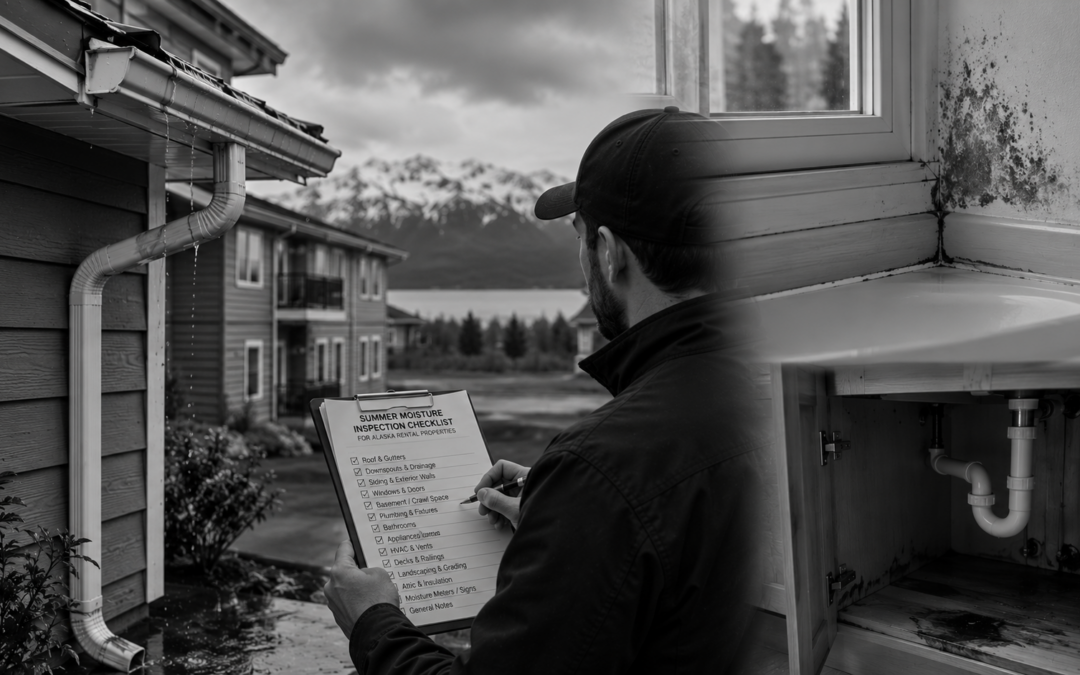
How Landlords and Property Managers Can Detect Moisture Problems Before They Become Costly Repairs
When people think about moisture damage in Alaska, winter is often the first season that comes to mind. However, summer presents its own set of moisture-related risks that can quietly affect residential rentals, commercial buildings, HOA communities, and investment properties.
As snow melts, seasonal rain increases, and temperatures fluctuate, hidden moisture problems often begin to reveal themselves. Roof leaks become visible, crawl spaces become damp, drainage systems are tested by rainfall, and condensation may develop in poorly ventilated areas.
For landlords and property managers, summer is one of the best times to perform a comprehensive moisture inspection. Identifying issues early can help prevent mold growth, wood rot, structural deterioration, and expensive emergency repairs later in the year.
This checklist outlines the most important areas to inspect and explains why each one matters—especially for properties in Anchorage and surrounding Alaska communities.
Why Summer Is the Best Time to Inspect for Moisture
Alaska properties experience months of snow, ice, freezing temperatures, and repeated freeze-thaw cycles.
While winter causes much of the damage, summer is often when the evidence finally appears.
Common examples include:
- Water stains on ceilings after snow melts
- Damp crawl spaces
- Foundation drainage problems
- Roof leaks exposed by rain
- Mold growth in enclosed spaces
- Soft exterior wood around windows and doors
Summer weather provides safer access to roofs, foundations, exterior walls, and landscaping, making it easier to inspect and repair moisture-related issues before colder weather returns.
Summer Moisture Inspection Checklist
1. Inspect the Roof for Water Entry
The roof is your property’s first defense against moisture.
After Alaska’s winter season, inspect for:
- Missing or damaged shingles
- Loose flashing
- Cracked sealants
- Damaged roof penetrations
- Signs of ponding water
- Moss or algae growth
- Soft spots
Inside the attic, check for:
- Water stains
- Damp insulation
- Mold
- Wood discoloration
- Musty odors
Even a small roof leak can gradually damage insulation, framing, ceilings, and drywall.
2. Clean and Inspect Gutters and Downspouts
Proper drainage protects both the roof and foundation.
Look for:
- Clogged gutters
- Loose fasteners
- Improper slope
- Downspouts draining too close to the foundation
- Overflow marks
- Rust or deterioration
Water should flow several feet away from the building whenever possible.
Poor drainage is one of the leading contributors to foundation moisture problems.
3. Check Exterior Walls
Moisture often enters through the building envelope.
Inspect siding for:
- Cracks
- Loose panels
- Rotting trim
- Damaged paint
- Failed caulking
- Gaps around windows
- Water stains
Pay close attention to areas where different materials meet, as these joints are common entry points for water.
4. Examine Windows and Doors
Window and door openings frequently develop leaks over time.
Check for:
- Cracked caulk
- Failed weather stripping
- Soft wood
- Water staining
- Condensation
- Mold
- Drafts
Replacing deteriorated sealants during summer helps prepare the property for Alaska’s colder months.
5. Inspect the Foundation
Walk the entire perimeter of the property.
Look for:
- Standing water
- Soil erosion
- Foundation cracks
- Damp concrete
- Vegetation growing too close to walls
- Improper grading
Water should always drain away from the building—not toward it.
Persistent moisture near the foundation can eventually contribute to structural movement and basement leaks.
6. Check Crawl Spaces and Basements
These areas often reveal hidden moisture long before it becomes visible elsewhere.
Inspect for:
- Standing water
- Damp insulation
- Mold
- Mildew
- Wood rot
- Condensation on pipes
- Musty odors
Good ventilation is essential for reducing humidity and preventing long-term deterioration.
7. Inspect Plumbing Fixtures
Not all moisture problems come from weather.
Check:
- Under sinks
- Around toilets
- Water heaters
- Laundry connections
- Supply lines
- Shutoff valves
- Exterior hose bibs
Small plumbing leaks often remain unnoticed until significant damage has already occurred.
According to the U.S. Environmental Protection Agency (EPA), even minor household leaks can waste thousands of gallons of water each year while contributing to moisture-related damage.
8. Evaluate HVAC and Ventilation
Cooling systems and ventilation equipment can contribute to excess moisture when not functioning properly.
Inspect:
- Condensate drain lines
- Air filters
- Bathroom exhaust fans
- Kitchen ventilation
- Mechanical room ventilation
Proper airflow helps control indoor humidity and reduces conditions that allow mold to grow.
The U.S. Department of Energy recommends regular HVAC maintenance to improve efficiency and indoor air quality.
9. Inspect Decks, Balconies, and Exterior Wood
Outdoor wood structures absorb moisture throughout the year.
Look for:
- Rotting boards
- Soft wood
- Loose fasteners
- Peeling stain
- Surface cracks
- Water pooling
Protective coatings may need reapplication during summer to extend the life of exterior structures.
10. Look for Mold Warning Signs
Mold doesn’t always appear as obvious black spots.
Watch for:
- Musty odors
- Peeling paint
- Bubbling drywall
- Water stains
- Persistent condensation
- Discoloration around windows
Moisture control remains the most effective strategy for preventing mold growth.
The Centers for Disease Control and Prevention (CDC) recommends correcting moisture problems promptly since mold cannot grow without water.
Common Causes of Summer Moisture Problems in Alaska
Property managers frequently encounter moisture issues caused by:
- Snowmelt entering roof systems
- Blocked gutters
- Heavy summer rainfall
- Poor drainage
- Damaged flashing
- Plumbing leaks
- Inadequate ventilation
- Failed window seals
- Foundation settlement
- Landscaping directing water toward buildings
Understanding these causes helps prioritize inspections throughout the summer season.
Why Documentation Matters
Every inspection should include written notes and photographs.
Document:
- Areas inspected
- Moisture observations
- Photos of damage
- Measurements of affected areas
- Recommended repairs
- Repair completion dates
Keeping accurate maintenance records helps property owners monitor recurring issues and supports future maintenance planning.
How Often Should Moisture Inspections Be Performed?
A good schedule includes:
Monthly
- Plumbing checks
- Visible leak inspections
- HVAC condensate checks
Quarterly
- Exterior walkthrough
- Drainage evaluation
- Roof observation from ground level
Seasonally
- Full roof inspection
- Foundation review
- Crawl space inspection
- Gutter cleaning
- Exterior caulking evaluation
Regular inspections reduce the likelihood of emergency repairs and help preserve the long-term condition of the property.
Final Thoughts
Moisture is one of the most common—and costly—threats to rental properties in Alaska. While winter creates many of the conditions that lead to water damage, summer provides the ideal opportunity to identify and correct problems before they worsen.
By following a comprehensive moisture inspection checklist, landlords and property managers can help protect structural components, improve indoor conditions, reduce repair costs, and extend the life of their investment.
Routine inspections are a practical way to stay ahead of maintenance issues and prepare properties for the seasons ahead.
For more seasonal maintenance guides, property care resources, and practical insights for landlords and property managers, you can explore our PIVOT Resource page to learn more about maintenance management best practices and property support throughout Anchorage and surrounding Alaska communities.
Frequently Asked Questions
Why are summer moisture inspections important in Alaska?
Summer reveals damage caused by snow, ice, and freeze-thaw cycles. It is the best time to identify roof leaks, drainage problems, and hidden moisture before winter returns.
What are the first signs of moisture damage?
Common warning signs include water stains, musty odors, peeling paint, mold, soft wood, damp insulation, and condensation around windows or plumbing.
How often should landlords inspect rental properties for moisture?
Visible moisture should be checked monthly, while comprehensive seasonal inspections should be completed at least once each summer and before winter.
Recent Comments