Managing a property involves far more than responding to maintenance requests or scheduling routine inspections. One of the most important responsibilities of any property manager is recognizing the early warning signs of structural problems before they develop into major safety hazards or costly repairs.
Many structural issues begin with subtle changes that are easy to overlook—a small crack in a foundation wall, a door that suddenly won’t close properly, or a section of the floor that feels uneven. While these signs may appear minor at first, they can indicate underlying problems that require professional evaluation.
For property managers in Anchorage and throughout Alaska, seasonal weather conditions—including freeze-thaw cycles, heavy snow loads, moisture intrusion, and shifting soil—can accelerate structural deterioration if left unaddressed.
Understanding what to look for can help protect residents, preserve property value, and reduce long-term maintenance costs.
Why Structural Inspections Matter
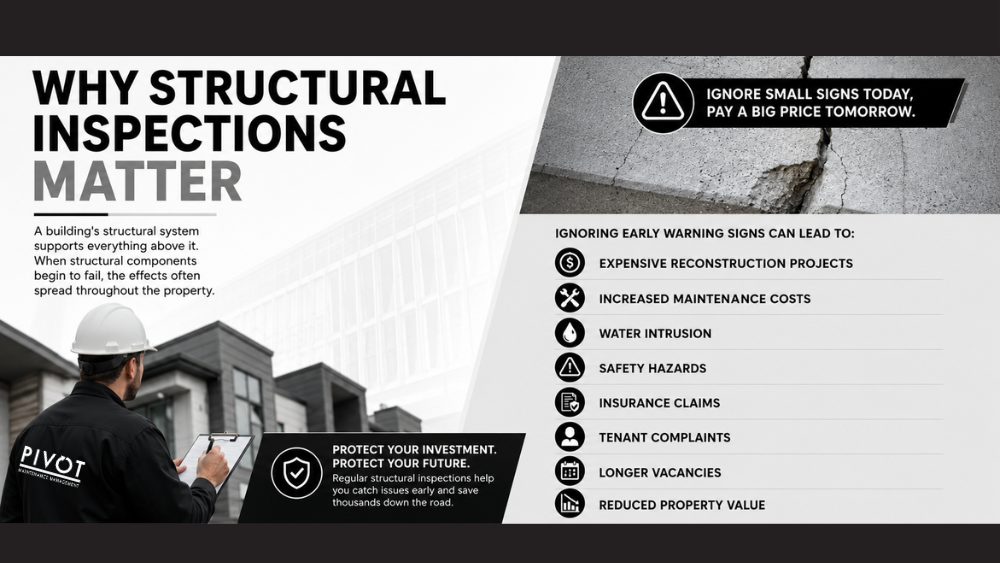
A building’s structural system supports everything above it. When structural components begin to fail, the effects often spread throughout the property.
Ignoring early warning signs can lead to:
- Expensive reconstruction projects
- Increased maintenance costs
- Water intrusion
- Safety hazards
- Insurance claims
- Tenant complaints
- Longer vacancies
- Reduced property value
Routine inspections help identify issues early, when repairs are generally simpler and more affordable.
1. Cracks in Foundations
Not every foundation crack is cause for alarm, but some deserve immediate attention.
Monitor for:
- Horizontal cracks
- Stair-step cracks in masonry
- Wide or expanding cracks
- Cracks allowing water intrusion
- Multiple cracks appearing in the same area
Small hairline cracks are often caused by normal settling, but larger or widening cracks may indicate foundation movement or soil-related issues.
Anchorage’s seasonal freeze-thaw cycles can place additional stress on foundations, making regular inspections especially important.
2. Uneven or Sloping Floors
Floors should feel level and stable.
Possible warning signs include:
- Floors that noticeably slope
- Soft or spongy areas
- Bouncing when walked on
- New gaps between flooring materials
- Furniture appearing uneven
These conditions may indicate:
- Foundation settlement
- Damaged floor joists
- Moisture damage
- Structural shifting
Early investigation can prevent more extensive repairs later.
3. Doors and Windows That Suddenly Stick
A door that once operated normally but suddenly becomes difficult to open or close may be more than a hardware issue.
Structural movement can cause:
- Misaligned door frames
- Window binding
- Uneven gaps
- Doors that swing open by themselves
- Cracks around frames
While seasonal humidity can cause temporary swelling in wood materials, persistent alignment problems should be evaluated.
4. Large Interior Wall Cracks
Small drywall cracks may occur naturally as buildings settle.
However, larger cracks deserve closer attention.
Watch for:
- Diagonal cracks from doors or windows
- Cracks wider than approximately 1/8 inch
- Reappearing repaired cracks
- Ceiling-to-wall separation
- Multiple cracks developing together
Patterns often provide valuable clues about underlying structural movement.
5. Exterior Wall Separation
Exterior inspections are just as important as interior walkthroughs.
Look for:
- Brick separation
- Bulging siding
- Gaps between walls and trim
- Detached masonry
- Leaning retaining walls
These issues may indicate foundation movement or moisture-related deterioration.
6. Water Damage Around Structural Components
Water is one of the leading causes of structural deterioration.
Inspect for:
- Rotting wood
- Rusted steel supports
- Mold growth
- Damp crawl spaces
- Persistent moisture stains
Even a slow roof leak can gradually weaken framing members over time.
According to the Federal Emergency Management Agency (FEMA), proper moisture management is one of the most effective ways to reduce long-term building damage.
7. Roof Sagging
Roof structures endure significant stress in Alaska.
Heavy snow accumulation, aging materials, and water intrusion can contribute to structural problems.
Watch for:
- Visible sagging
- Uneven roof lines
- Interior ceiling deflection
- Cracked roof framing
- Water-damaged attic supports
Roof inspections should be performed regularly, especially after severe winter weather.
8. Basement or Crawl Space Issues
Many structural concerns begin below the main living space.
Inspect crawl spaces and basements for:
- Standing water
- Mold
- Wood decay
- Foundation movement
- Pest damage
- Damaged support posts
These areas often reveal early signs of larger structural concerns before they become visible elsewhere.
9. Chimney Movement
Chimneys often move independently from the rest of the structure.
Signs of concern include:
- Leaning chimneys
- Cracked mortar joints
- Separation from exterior walls
- Loose bricks
- Water intrusion around flashing
Because chimneys are heavy structures, movement should never be ignored.
10. Repeated Moisture Problems
Recurring moisture problems often indicate more than poor ventilation.
Persistent water intrusion may point to:
- Foundation drainage issues
- Roof failures
- Structural openings
- Improper grading
- Exterior envelope damage
Moisture accelerates deterioration and creates ideal conditions for mold and wood rot.
Alaska’s Climate Makes Early Detection Critical
Anchorage properties experience unique environmental stresses.
Common contributing factors include:
- Freeze-thaw cycles
- Frost heaving
- Snow loads
- Ice dams
- Seasonal ground movement
- Heavy precipitation
These conditions can gradually affect structural components over many years.
Routine inspections during the summer months provide an excellent opportunity to identify damage after winter and schedule repairs before colder weather returns.
Document Everything
Property managers should maintain detailed inspection records.
Include:
- Date of inspection
- Photographs
- Measurements of cracks
- Moisture readings when available
- Areas requiring follow-up
- Repair history
Good documentation helps monitor whether conditions remain stable or continue to worsen over time.
It also provides valuable information for contractors, engineers, insurance providers, and property owners.
When Should a Structural Engineer Be Contacted?
While many maintenance concerns can be handled through routine repairs, certain conditions warrant professional evaluation.
Consider consulting a structural engineer if you observe:
- Large or expanding foundation cracks
- Significant floor movement
- Roof sagging
- Leaning walls
- Major structural separation
- Persistent foundation settlement
Early evaluation often prevents more extensive—and expensive—repairs.
Preventative Maintenance Protects Structural Integrity
Many structural failures develop gradually because smaller maintenance issues are ignored.
Preventative maintenance should include:
- Roof inspections
- Gutter cleaning
- Drainage improvements
- Foundation monitoring
- Moisture control
- Exterior caulking
- Regular building walkthroughs
Addressing small issues early helps preserve the structural integrity of the property and minimizes future repair costs.
Final Thoughts
Structural issues rarely appear overnight. Most begin as subtle warning signs that gradually become more serious if left unaddressed.
For property managers, recognizing these indicators early is one of the best ways to protect tenants, preserve property value, and reduce unexpected maintenance expenses.
Routine inspections, proper documentation, and timely professional evaluations can significantly extend the life of a building while helping avoid costly emergency repairs.
For more maintenance insights, seasonal property care tips, and educational resources for landlords and property managers in Alaska, visit the PIVOT. You can also explore our Contact Us page to learn more about maintenance planning and property management best practices.
Recent Comments